Vertical vs. Horizontal Machining Centers: Which One Is Right for You?
Introduction: Choosing the Right Machining Center Matters
Selecting the right machining center is a critical decision that directly affects productivity, machining accuracy, floor space utilization, and long-term operating costs. Among the most common options in CNC machining are the Vertical Machining Center (VMC) and the Horizontal Machining Center (HMC).
While both machines are designed to perform milling, drilling, tapping, and contouring operations, their structural layouts and machining characteristics make them suitable for very different production scenarios. Understanding the key differences between vertical and horizontal machining centers is essential for manufacturers looking to optimize efficiency and return on investment.
What Is a Vertical Machining Center (VMC)?
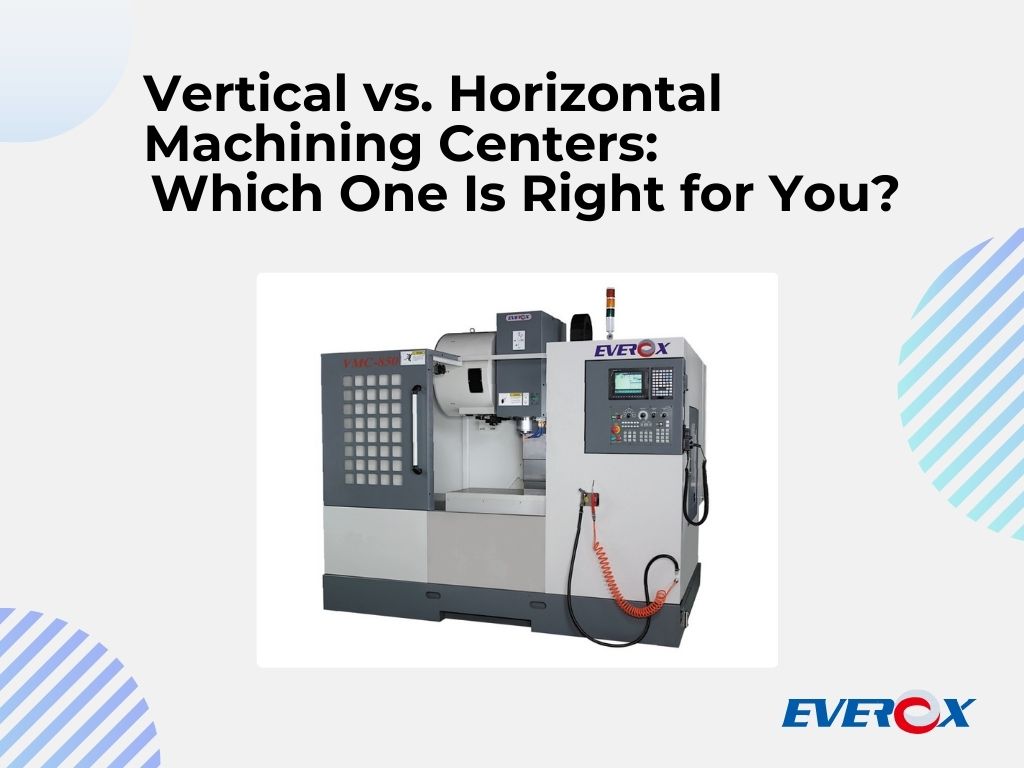
A vertical machining center features a vertically oriented spindle, meaning the cutting tool approaches the workpiece from above. This configuration is intuitive, easy to set up, and widely adopted across industries.
VMCs are commonly used for:
- Flat or prismatic parts
- Mold and die machining
- Prototyping and small-batch production
- General metalworking
Their popularity stems from their relatively compact footprint, lower initial investment, and ease of operation—making them ideal for both job shops and production environments that require flexibility.
What Is a Horizontal Machining Center (HMC)?
A horizontal machining center uses a horizontally oriented spindle. Chips fall away naturally from the cutting zone due to gravity, which improves chip evacuation and reduces heat accumulation during heavy cutting operations.
HMCs are typically applied in:
- High-volume production lines
- Large or heavy workpieces
- Multi-face machining
- Automotive and structural components
HMCs often feature pallet changers and tombstone fixtures, enabling multiple sides of a part to be machined in a single setup.
Key Differences Between Vertical and Horizontal Machining Centers
1. Machining Orientation and Chip Control
One of the most significant differences lies in how chips are managed during cutting.
- VMC: Chips tend to accumulate on the workpiece surface, requiring frequent clearing or coolant flushing.
- HMC: Chips fall away naturally, improving tool life and surface quality—especially during deep or heavy cuts.
For materials that generate large volumes of chips, such as cast iron or steel, HMCs offer a clear advantage.
2. Setup Flexibility and Ease of Use
- Vertical machining centers are generally easier to set up and program. Operators can visually inspect tool paths and part alignment, reducing setup time.
- Horizontal machining centers require more complex fixturing but enable machining on multiple sides without repositioning the workpiece.
For shops handling a wide variety of part types, VMCs provide greater flexibility and faster changeovers.
3. Productivity and Throughput
HMCs excel in high-volume, continuous production. With pallet changers and multi-face machining capability, they significantly reduce idle time.
VMCs, while slightly slower for large batch production, are highly efficient for mixed production environments, prototyping, and short runs where frequent setup changes are required.
4. Floor Space and Investment Cost
- VMCs generally require less floor space and have a lower upfront cost, making them attractive for small to mid-sized manufacturers.
- HMCs occupy more space and involve higher initial investment, but their productivity gains can justify the cost in large-scale operations.
The right choice often depends on production volume rather than machine capability alone.
5. Part Complexity and Accuracy
Both VMCs and HMCs can achieve excellent accuracy when properly designed and maintained. However:
- VMCs are well-suited for precision surface machining, cavities, and complex contours.
- HMCs shine when machining multiple faces with tight positional relationships, reducing cumulative errors from multiple setups.
Which Machining Center Is Right for You?
The choice between a vertical and horizontal machining center should be guided by the following considerations:
| Production Requirement | Recommended Choice |
|---|---|
| Prototyping & small batches | Vertical Machining Center |
| High-volume production | Horizontal Machining Center |
| Limited floor space | Vertical Machining Center |
| Multi-face machining | Horizontal Machining Center |
| Lower initial investment | Vertical Machining Center |
In many modern factories, manufacturers operate both VMCs and HMCs, assigning each to tasks where it performs best.
EVEROX Vertical Machining Centers: Built for Real-World Production
At EVEROX Industrial Co., Ltd., we design vertical machining centers with a clear understanding that no two production environments are the same. Our VMCs are built on rib-reinforced Meehanite cast-iron structures, equipped with precision linear guideways and servo-driven axes to ensure rigidity, stability, and long-term accuracy.
These design principles make EVEROX vertical machining centers well-suited for industries such as automotive, aerospace, mold making, and general metalworking, where consistent performance and reliability are essential.
Frequently Asked Questions (FAQ)
1. Is a vertical machining center suitable for high-volume production?
Yes, a vertical machining center can be used for high-volume production, especially when parts are relatively simple and require frequent changeovers. With automatic tool changers, pallet systems, and optimized CNC programs, VMCs can deliver stable and repeatable output. However, for continuous multi-face machining, a horizontal machining center may offer higher efficiency.
2. What are the main advantages of a vertical machining center over a horizontal one?
Vertical machining centers offer easier setup, lower initial investment, and a smaller footprint. Their vertical spindle orientation allows operators to visually inspect setups more easily, making VMCs ideal for prototyping, mold making, and mixed-production environments.
3. When should a manufacturer choose a horizontal machining center instead?
A horizontal machining center is more suitable for high-volume production, heavy cutting, or parts that require machining on multiple sides. The horizontal spindle orientation improves chip evacuation and reduces cycle time in mass production.
4. Can vertical machining centers handle complex and high-precision parts?
Yes. Modern vertical machining centers with rigid structures, precision guideways, and advanced CNC control systems can achieve micron-level accuracy. When equipped with 5-axis capability, VMCs can machine complex geometries and contoured surfaces efficiently.
Conclusion: Making a Strategic Investment
Choosing between a vertical machining center and a horizontal machining center is not about which machine is better—it is about which machine is better suited to your production needs. By aligning machine capabilities with application requirements, manufacturers can improve efficiency, reduce costs, and enhance long-term competitiveness.
✉ Contact EVEROX today to discuss your machining challenges and discover the right CNC solution for your factory.