What Is a Milling Machine? Types, Applications, and How to Choose the Right Milling Machine Manufacturer
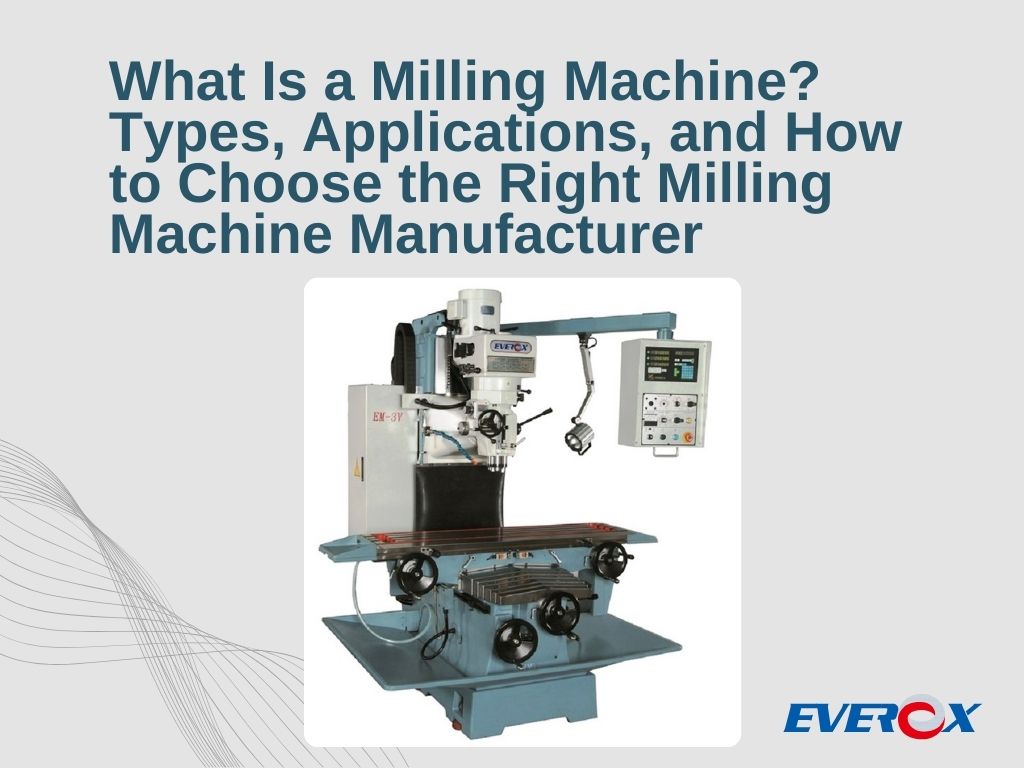
Introduction: Why Milling Machines Still Define Modern Manufacturing
A milling machine remains one of the most fundamental and versatile machine tools in industrial production. From traditional toolrooms to fully automated smart factories, milling machines are used to create precise components across countless industries.
However, understanding what a milling machine does is only part of the equation. For manufacturers investing in new equipment, selecting the right milling machine manufacturer is just as important as choosing the machine type itself. The long-term performance, reliability, and productivity of your factory depend heavily on both decisions.
This guide explains how milling machines work, the different types available, their industrial applications, and what to consider when choosing a reliable milling machine supplier.
How a Milling Machine Works
A milling machine removes material using a rotating cutting tool. The workpiece is secured on a movable table that travels along multiple axes, allowing the machine to cut slots, drill holes, shape contours, and create complex geometries.
Most milling machines operate along three primary axes:
-
X-axis (left-right movement)
-
Y-axis (front-back movement)
-
Z-axis (vertical movement)
Advanced machines may include additional rotary axes, enabling multi-axis machining for complex components.
Unlike lathes—where the workpiece rotates—a milling machine rotates the cutting tool, giving it greater flexibility for shaping flat surfaces and intricate forms.
Types of Milling Machines
1. Vertical Milling Machine
A vertical milling machine features a vertically oriented spindle. This design allows for easy setup and clear visibility of the workpiece.
Vertical machines are ideal for:
-
Surface machining
-
Slot cutting
-
Toolroom work
-
General manufacturing
They are widely used in both small workshops and industrial facilities due to their simplicity and adaptability.
2. Horizontal Milling Machine
A horizontal milling machine has a horizontally mounted spindle. This configuration improves chip evacuation and provides greater rigidity for heavy cutting.
Common applications include:
-
Large structural parts
-
Automotive components
-
High-volume production
Horizontal machines are preferred when heavy-duty machining and consistent throughput are priorities.
3. Conventional (Manual) Milling Machine
A manual milling machine is controlled directly by an operator using mechanical handwheels. While less automated, it remains valuable for:
-
Repair and maintenance work
-
Prototyping
-
Training environments
-
Low-volume production
Conventional machines offer flexibility and lower investment costs.
4. CNC Milling Machine
A CNC milling machine uses computer numerical control to automate movements with high precision and repeatability. By programming toolpaths in advance, manufacturers can produce complex parts consistently.
CNC milling machines are essential for:
-
Tight-tolerance machining
-
Repeatable production runs
-
Complex 3D shapes
-
Multi-axis operations
They significantly increase efficiency while reducing operator-dependent errors.
Industrial Applications of Milling Machines
Milling machines are critical across various industries:
Automotive
Engine components, transmission housings, and structural parts require precision milling for dimensional accuracy.
Aerospace
High-performance aluminum and titanium components demand advanced CNC milling capabilities.
Mold & Die Manufacturing
Precision cavities and complex geometries rely heavily on vertical machining centers and CNC milling systems.
General Engineering
From brackets to machine frames, milling machines support everyday industrial fabrication.
Why the Milling Machine Manufacturer Matters
When purchasing a milling machine, the machine specifications are only part of the evaluation. Choosing a reliable milling machine manufacturer ensures:
-
Consistent build quality
-
Structural rigidity and long-term accuracy
-
Stable CNC control integration
-
After-sales support and spare parts availability
-
Technical service responsiveness
An experienced industrial milling machine manufacturer understands real production challenges and designs machines accordingly.
For global buyers, working with a reputable Taiwan milling machine manufacturer offers the advantage of advanced manufacturing standards combined with competitive cost structures.
Key Factors When Choosing a Milling Machine Manufacturer
Before making an investment, manufacturers should evaluate:
-
Machine Structure – Is the frame rigid and vibration-resistant?
-
Precision Components – Are guideways and ball screws high-grade?
-
Control System Integration – Does the manufacturer provide reliable CNC systems?
-
Customization Capability – Can the machine be adapted to specific production needs?
-
Global Support Network – Is technical service available internationally?
These factors directly influence long-term performance and total cost of ownership.
EVEROX: A Reliable Milling Machine Manufacturer
As a professional milling machine manufacturer in Taiwan, EVEROX Industrial Co., Ltd. provides both conventional and CNC milling solutions designed for durability, precision, and industrial reliability.
Our machines feature:
-
Rigid cast-iron structures
-
Precision guideway systems
-
Stable spindle performance
-
CNC integration for high-accuracy applications
With experience serving global industries, EVEROX delivers milling machine solutions suitable for both flexible workshops and high-volume manufacturing environments.
Choosing a reliable milling machine supplier ensures your investment supports production efficiency for years to come.
Frequently Asked Questions (FAQ)
1. What is the difference between a milling machine and a CNC milling machine?
A traditional milling machine is manually operated, while a CNC milling machine uses programmed instructions for automated and highly precise machining. CNC machines provide greater repeatability and efficiency.
2. How do I choose a reliable milling machine manufacturer?
Evaluate structural rigidity, precision components, CNC control integration, service support, and the manufacturer’s industry experience. A reliable supplier provides long-term technical support and consistent build quality.
3. Is a Taiwan milling machine manufacturer a good choice?
Taiwan is globally recognized for its machine tool industry. Many Taiwan milling machine manufacturers combine advanced engineering standards with competitive pricing and reliable export experience.
4. Can one milling machine handle different materials?
Yes. Milling machines can process steel, aluminum, brass, plastics, and more. The machine’s rigidity, spindle power, and tooling determine material capability.
5. What industries use milling machines the most?
Automotive, aerospace, mold & die, general metalworking, and industrial equipment manufacturing are among the most common industries.
Conclusion: Beyond the Machine—Choose the Right Partner
A milling machine is an essential investment for any manufacturing facility. But selecting the right milling machine manufacturer is equally critical to ensure long-term precision, stability, and production efficiency.
By understanding machine types, industrial applications, and supplier reliability, manufacturers can make informed decisions that strengthen operational performance.
✉ Contact EVEROX today to explore milling machine solutions designed to support your manufacturing goals.