7 Signs It's Time to Upgrade Your Milling Machine
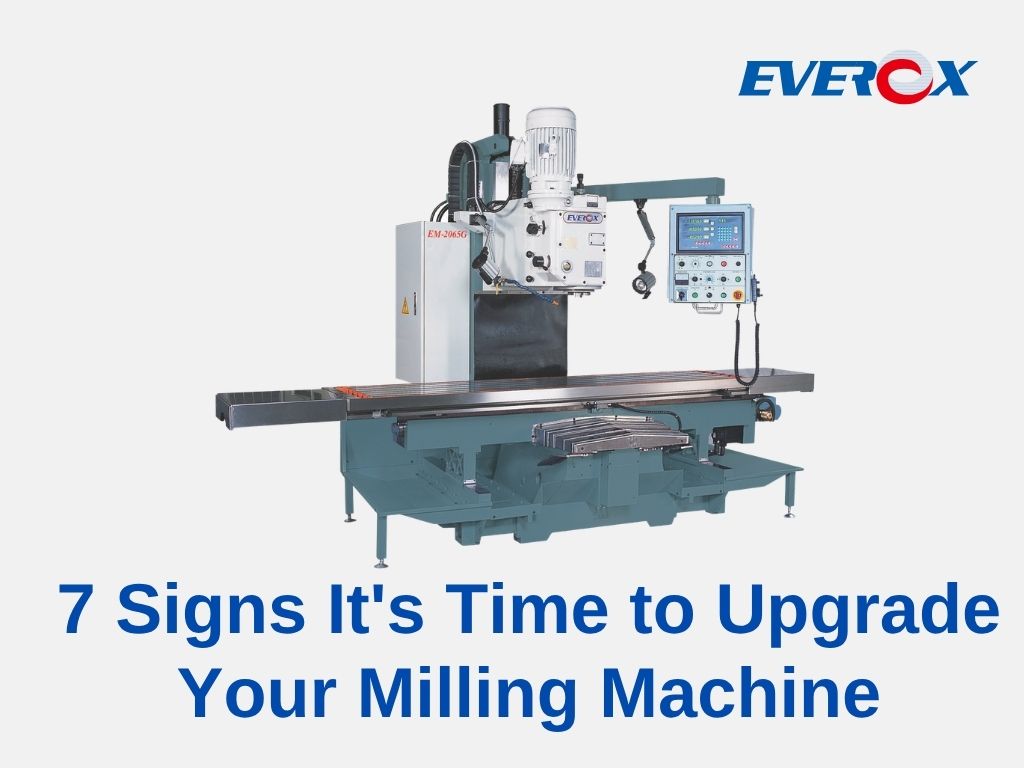
Introduction: Is Your Milling Machine Holding Back Your Production?
A milling machine is one of the most valuable assets in any machining workshop. Whether producing precision molds, custom components, or industrial parts, the performance of your milling machine directly affects machining accuracy, production efficiency, and overall operating costs.
Many manufacturers continue using older milling machines simply because they are still operational. However, as customer expectations rise and production requirements become more demanding, aging equipment may gradually become a bottleneck rather than an asset. Declining precision, increasing downtime, and rising maintenance costs can all reduce profitability without being immediately noticeable.
At EVEROX Industrial Co., Ltd., we understand that upgrading a milling machine is more than replacing aging equipment—it is an investment in higher productivity, improved machining quality, and long-term manufacturing competitiveness.
If your current milling machine shows several of the following warning signs, it may be time to evaluate whether upgrading is the right decision.
Quick Checklist: Is It Time to Upgrade Your Milling Machine?
Before reviewing each sign in detail, use this checklist to assess your current machine.
- ✔ Difficulty maintaining machining accuracy
- ✔ Frequent machine breakdowns or downtime
- ✔ Increasing maintenance and repair costs
- ✔ Production capacity no longer meets demand
- ✔ More complex parts require multiple setups
- ✔ Existing equipment cannot support future expansion
- ✔ Operating costs continue to rise every year
Quick Assessment
If you checked three or more of the items above, your current milling machine may already be limiting your production efficiency. Upgrading your equipment could improve productivity, reduce operating costs, and better prepare your business for future growth.
Sign #1: Machining Accuracy Is Becoming Inconsistent
One of the earliest indicators that a milling machine is reaching its performance limit is declining machining accuracy.
You may begin noticing:
- Parts requiring additional finishing
- Increasing dimensional variation
- Difficulty maintaining tight tolerances
- Higher rejection rates during inspection
- Operators making frequent manual adjustments
These issues are often caused by wear in guideways, spindle bearings, ball screws, and other critical mechanical components. Even with regular maintenance, long-term mechanical wear gradually reduces positioning accuracy and repeatability.
For manufacturers serving industries such as automotive, aerospace, mold making, or precision engineering, inconsistent machining quality can directly affect customer confidence and increase production costs. When maintaining accuracy becomes increasingly difficult, it may be more practical to evaluate a newer milling machine rather than continue compensating for aging equipment.
Sign #2: Machine Downtime Is Becoming More Frequent
Unexpected downtime is one of the most expensive hidden costs in manufacturing.
Although repairs may restore machine operation temporarily, repeated breakdowns often indicate that the machine is approaching the end of its economical service life.
Common warning signs include:
- More frequent emergency repairs
- Longer repair times
- Difficulty sourcing replacement parts
- Unexpected production interruptions
- Missed delivery schedules
Every hour of downtime not only reduces production capacity but also increases labor costs and disrupts production planning.
If maintenance is becoming a regular part of your production schedule rather than preventive maintenance, it may be time to evaluate whether continuing repairs is the best long-term strategy.
Sign #3: Production Efficiency No Longer Meets Demand
Manufacturing continues to evolve toward shorter lead times and higher production efficiency.
Older milling machines often struggle to keep pace because they were designed for production environments that differ significantly from today's requirements.
You may experience:
- Longer machining cycles
- Slower feed rates
- Increased setup time
- Greater dependence on manual operations
- Limited production capacity
Even when product quality remains acceptable, slower production can prevent manufacturers from taking on larger orders or responding quickly to customer demands.
When production efficiency becomes the limiting factor rather than machine availability, upgrading equipment may provide a greater return than continuing to optimize aging machinery.
Sign #4: Your Parts Are Becoming More Complex
Customer requirements continue to evolve toward increasingly sophisticated component designs.
Many manufacturers are now machining parts that require:
- Multi-sided machining
- Complex contours
- Tighter tolerances
- Better surface finishes
- Harder-to-machine materials
Machines originally designed for simpler workpieces often require multiple setups to complete these operations. Additional setups increase machining time while also introducing positioning errors that can affect final part quality.
If your production increasingly involves complex components, it may be worth considering equipment with improved structural rigidity, higher positioning accuracy, and greater machining stability to support future manufacturing requirements.
Sign #5: Repair Costs Keep Increasing
Although an older milling machine may have already paid for itself, rising maintenance expenses can gradually reduce its value.
Common signs include:
- Frequent replacement of worn components
- Increasing repair frequency
- Longer maintenance downtime
- Difficulty sourcing obsolete spare parts
- Higher labor costs for machine adjustments
These expenses often accumulate over time and are easy to overlook when viewed individually. However, when combined with lost production time and lower efficiency, the total cost can become substantial.
Instead of focusing only on repair bills, manufacturers should evaluate the total cost of ownership, including maintenance costs, downtime, production efficiency, and long-term reliability.
Sign #6: Your Business Has Outgrown Your Current Milling Machine
Manufacturing requirements rarely remain the same.
As your business grows, customers may require:
- Higher machining precision
- Larger or more complex workpieces
- Shorter lead times
- Higher production capacity
- Better process consistency
A milling machine that performed well several years ago may no longer be capable of supporting today's production demands.
Planning equipment upgrades before production limitations affect customer satisfaction allows manufacturers to remain competitive while preparing for future growth.
Sign #7: Your Current Milling Machine No Longer Delivers Long-Term Value
A milling machine should be viewed as a long-term investment rather than simply another piece of equipment.
As machines age, operating costs often increase while productivity gradually declines. Even if the machine continues to function, lower efficiency, inconsistent machining quality, and higher maintenance expenses can reduce its overall value.
When evaluating whether to upgrade, manufacturers should consider questions such as:
- Is the machine still supporting current production goals?
- Does it provide the machining accuracy customers expect?
- Is downtime becoming more frequent?
- Are maintenance costs continuing to increase?
- Can the machine support future business growth?
If the answer to several of these questions is "No," replacing the machine may provide greater long-term value than continuing to maintain aging equipment.
Upgrade or Keep Your Current Milling Machine?
If you're still uncertain whether upgrading is the right decision, the comparison below can help evaluate the long-term impact of both options.
| Consideration | Continue Using Your Current Milling Machine | Upgrade to a New Milling Machine |
|---|---|---|
| Machining Accuracy | Acceptable for basic applications but may gradually decline | Stable accuracy and consistent machining performance |
| Production Efficiency | Longer cycle times and more manual adjustments | Higher productivity and improved machining efficiency |
| Maintenance Cost | Increasing repair frequency and higher maintenance expenses | Lower maintenance requirements and improved reliability |
| Downtime | Greater risk of unexpected breakdowns | Improved machine availability and production stability |
| Future Production | Limited ability to meet evolving production requirements | Better prepared for automation, tighter tolerances, and production growth |
| Long-Term Value | Lower upfront cost but increasing operating expenses | Higher initial investment with stronger long-term return |
Key Takeaway
If your current milling machine frequently requires repairs, struggles to maintain machining accuracy, or limits production capacity, upgrading may provide significant long-term benefits. A modern milling machine can improve machining consistency, reduce downtime, lower operating costs, and help manufacturers remain competitive in today's manufacturing environment.
Why Choose EVEROX as Your Milling Machine Manufacturer?
Choosing the right milling machine manufacturer is just as important as selecting the right machine. Beyond machine specifications, manufacturers should also consider engineering expertise, machine quality, technical support, and long-term service.
At EVEROX Industrial Co., Ltd., we provide a comprehensive range of milling solutions, including conventional milling machines, CNC milling machines, and vertical machining centers to support manufacturers across various industries.
Our milling machines are designed with a focus on:
- High structural rigidity for stable machining performance
- Precision guideway and spindle systems for consistent accuracy
- Reliable long-term operation with reduced maintenance requirements
- Flexible machine configurations for different machining applications
- Professional technical support and dependable after-sales service
Whether you're replacing aging equipment, expanding production capacity, or investing in future manufacturing capabilities, EVEROX is committed to delivering milling machine solutions that help improve productivity, machining quality, and long-term operational performance.
Explore our milling machine product lineup to learn more about the solutions available for your manufacturing requirements.
Frequently Asked Questions (FAQ)
1. How long does a milling machine typically last?
A well-maintained milling machine can remain in operation for many years. However, declining accuracy, increasing maintenance costs, and reduced production efficiency are often stronger indicators for replacement than machine age alone.
2. When should I replace instead of repair my milling machine?
If repairs become more frequent, spare parts are difficult to obtain, or downtime begins affecting production schedules and profitability, replacing the machine may provide better long-term value.
3. Will a new milling machine improve machining quality?
Modern milling machines generally offer improved structural rigidity, positioning accuracy, and machining stability, helping manufacturers achieve better consistency and tighter tolerances.
4. Is upgrading only necessary for high-volume production?
No. Even manufacturers producing small or medium production volumes can benefit from improved machining accuracy, reduced downtime, and lower maintenance costs.
5. How do I choose the right milling machine for my factory?
The best choice depends on your workpiece size, material, machining accuracy requirements, production volume, and future expansion plans. Working with an experienced milling machine manufacturer can help ensure you select equipment that matches your long-term production goals.
Conclusion
A milling machine is one of the most important investments in any manufacturing facility. While older equipment may continue operating for years, hidden costs such as declining machining accuracy, increasing downtime, and rising maintenance expenses can gradually reduce productivity and profitability.
Recognizing these warning signs early allows manufacturers to plan equipment upgrades strategically instead of reacting to unexpected failures.
If you're evaluating whether it's time to upgrade your milling machine, consult EVEROX Industrial Co., Ltd. Our team can help assess your production requirements and recommend the most suitable milling machine solution for your current operations and future growth.
✉ Contact EVEROX today to discuss your production goals and discover milling machine solutions designed for precision, reliability, and long-term performance.