Turret Milling Machine vs Standard Milling Machine: Key Differences Explained
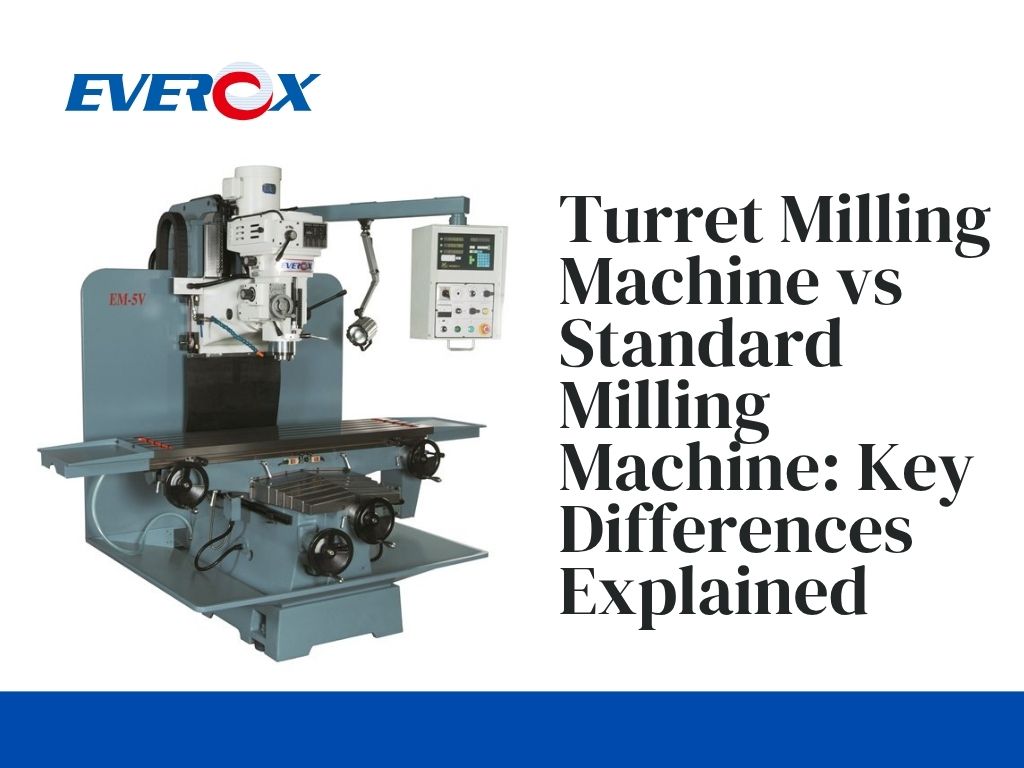
Introduction: Understanding the Right Milling Solution
In modern machining environments, choosing the right machine tool directly affects productivity, machining flexibility, and long-term operating efficiency. Among the most commonly discussed machines in traditional machining are the standard milling machine and the turret milling machine.
Although these two machines are closely related, they are designed for different production purposes and machining styles. At EVEROX Industrial Co., Ltd., we frequently receive inquiries from manufacturers trying to determine which type of milling machine better suits their workshop or production requirements.
Understanding the actual differences between these machines helps manufacturers make smarter investments and avoid selecting equipment that does not match their machining needs.
What Is a Standard Milling Machine?
A standard milling machine is a machine tool that removes material from a workpiece using rotating cutting tools. These machines are widely used for machining flat surfaces, slots, grooves, contours, and precision components across industries such as automotive, aerospace, mold making, and general metalworking.
Standard milling machines are available in both vertical and horizontal configurations, depending on spindle orientation. They are valued for their versatility, durability, and ability to perform a wide range of machining operations.
What Is a Turret Milling Machine?
A turret milling machine is a specific type of vertical milling machine designed for flexible and precise machining. The spindle remains fixed while the worktable moves along multiple axes during cutting operations.
Many turret milling machines also feature a movable turret head and quill mechanism, allowing operators to position the spindle at different angles for greater machining flexibility.
Turret milling machines are especially popular in:
- Toolrooms
- Maintenance workshops
- Prototype production
- Educational environments
- Small to medium batch machining
Because of their adaptability, turret mills are often considered one of the most versatile manual milling machine types.
Key Differences Between Standard and Turret Milling Machines
1. Machine Structure and Movement
The most noticeable difference lies in machine structure and cutting movement.
In many standard milling machines, the spindle and cutter rotate while the workpiece movement may vary depending on the machine configuration.
In a turret milling machine, the table moves both parallel and perpendicular to the spindle axis, offering greater flexibility for precision operations.
Turret mills also allow the spindle head to swivel or tilt, enabling operators to machine at multiple angles more easily.
2. Flexibility and Versatility
Turret milling machines are generally more flexible for small-batch and precision work. Their movable turret head and quill system make them highly suitable for:
- Drilling
- Slotting
- Surface milling
- Light contour machining
- Custom prototype work
Standard milling machines, especially larger horizontal types, are often better suited for heavy-duty material removal and repetitive production tasks.
3. Precision and Operator Control
Turret milling machines are widely preferred in environments where manual control and operator visibility are important. Because the spindle orientation is vertical and highly accessible, machinists can make fine adjustments more easily during machining operations.
For repair work, mold modifications, or custom machining, this flexibility becomes a major advantage.
4. Production Capacity
A standard milling machine—particularly large industrial or horizontal models—is often better suited for:
- Heavy cutting
- Large workpieces
- High material removal rates
- Continuous industrial production
Turret milling machines are typically optimized for medium-duty machining and flexible operation rather than maximum cutting force.
5. Space and Cost Considerations
Turret milling machines are generally more compact and cost-effective compared to larger industrial milling systems. This makes them ideal for:
- Small workshops
- Toolrooms
- Schools and training centers
- Manufacturers with limited floor space
For businesses focused on flexibility and lower investment cost, turret milling machines provide excellent value.
Comparison Table: Standard Milling Machine vs Turret Milling Machine
| Feature | Standard Milling Machine | Turret Milling Machine |
|---|---|---|
| Machine Orientation | Horizontal or vertical | Mainly vertical |
| Spindle Movement | Varies by machine type | Fixed spindle with movable table |
| Flexibility | Moderate | Very high |
| Heavy-Duty Cutting | Excellent | Moderate |
| Best For | Industrial production | Toolrooms and precision work |
| Machine Size | Larger | More compact |
Which One Should You Choose?
The answer depends on your production goals and machining environment.
Choose a Standard Milling Machine If:
- You process large or heavy workpieces
- High material removal is required
- Production volume is high
- Rigidity and cutting power are priorities
Choose a Turret Milling Machine If:
- Flexibility is more important
- You perform custom or prototype work
- Space is limited
- Precision manual operation is required
Many manufacturers operate both machine types to balance flexibility and productivity.
EVEROX Milling Machine Solutions
At EVEROX Industrial Co., Ltd., we understand that different manufacturers require different machining capabilities. Our milling machine solutions are designed with a focus on:
- Structural rigidity
- Machining precision
- Long-term reliability
- Flexible operation
Whether customers require standard milling machines for general machining or flexible milling machine solutions for precision workshop applications, EVEROX provides dependable equipment tailored to real manufacturing environments.
Explore our milling machine product lineup here:
EVEROX Milling Machine Series
Frequently Asked Questions (FAQ)
1. Is a turret milling machine the same as a vertical milling machine?
A turret milling machine is a type of vertical milling machine, but not all vertical milling machines are turret mills. Turret mills specifically feature a movable turret head and flexible spindle positioning.
2. Which machine is better for heavy cutting?
Standard horizontal milling machines are generally better for heavy-duty cutting because of their rigidity and cutting stability.
3. Why are turret milling machines popular in toolrooms?
Turret milling machines offer excellent flexibility, visibility, and ease of operation, making them ideal for repair work, prototypes, and precision machining.
4. Are turret milling machines suitable for production work?
Yes, but they are typically more suitable for low to medium-volume production rather than large-scale industrial machining.
Conclusion
Both standard milling machines and turret milling machines play important roles in modern machining. The best choice depends on factors such as production volume, machining complexity, available space, and required flexibility.
For manufacturers seeking reliable milling solutions, selecting the right machine—and the right machine tool partner—is essential for long-term production success.
Contact EVEROX Industrial Co., Ltd. to discuss the most suitable milling machine solution for your production requirements.