How to Choose the Right Milling Machine for Your Production Needs?
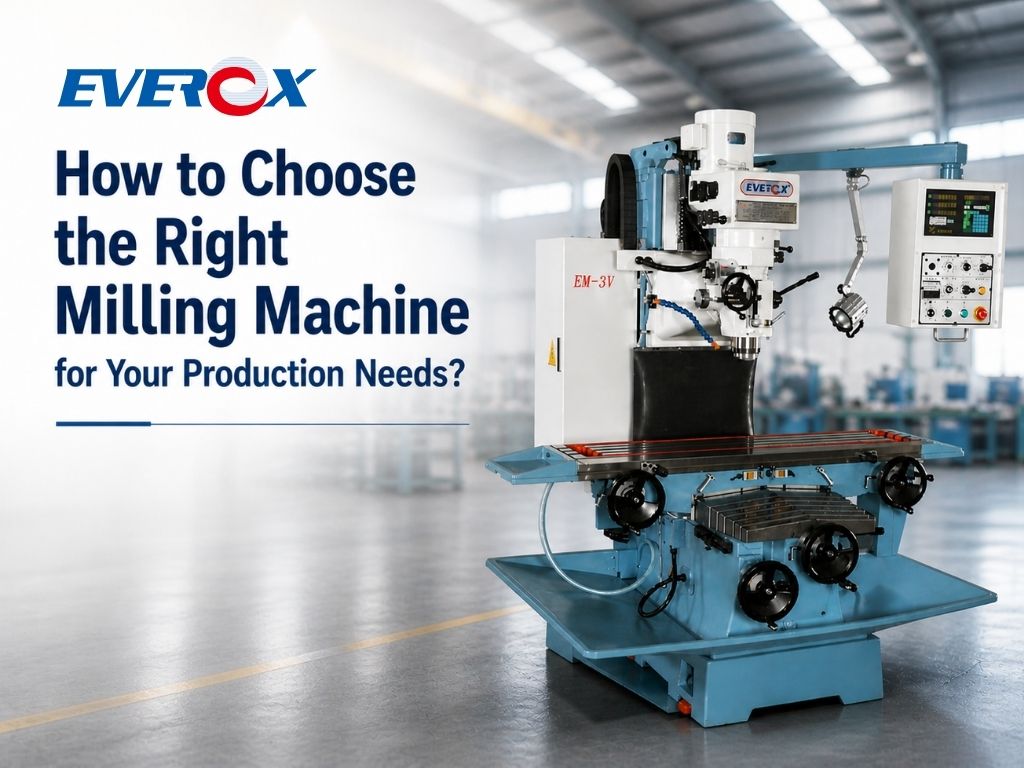
Introduction: Choosing the Right Milling Machine Is a Strategic Decision
Investing in a milling machine is not just about purchasing equipment—it is a strategic decision that directly impacts your production efficiency, product quality, and long-term operational costs.
With a wide range of options available, from conventional manual machines to advanced CNC systems, selecting the right solution can be challenging. More importantly, choosing a reliable milling machine manufacturer plays a crucial role in ensuring consistent performance and long-term support.
To make the right choice, manufacturers must evaluate their actual production needs rather than focusing solely on specifications or price.
1. Understand Your Production Type
The first step in selecting the right milling machine is understanding your production environment.
High-Mix, Low-Volume Production
If your business focuses on custom parts, prototypes, or small batch orders, flexibility is essential. In this case:
-
Conventional milling machines or compact CNC machines are ideal
-
Quick setup and easy operation are more important than automation
-
Operator control and adaptability are key advantages
High-Volume Production
For manufacturers producing large quantities of identical parts:
-
CNC milling machines are the preferred choice
-
Automation and repeatability are critical
-
Consistent quality and reduced cycle time improve profitability
Matching the machine type to your production style ensures efficiency from day one.
2. Evaluate Material and Cutting Requirements
Different materials place different demands on a milling machine.
-
Aluminum: Requires high spindle speed and smooth cutting performance
-
Steel: Needs strong rigidity and torque
-
Titanium or hard alloys: Requires excellent vibration control and thermal stability
A high-quality milling machine must provide:
-
Rigid machine structure
-
Stable spindle performance
-
Precision guideways
Choosing a machine without considering material requirements can lead to poor surface finish, tool wear, and reduced accuracy.
3. Consider Machine Rigidity and Structure
One of the most overlooked factors when choosing a milling machine is structural rigidity.
A rigid machine:
-
Reduces vibration during cutting
-
Improves surface finish
-
Maintains dimensional accuracy
-
Extends tool life
Machines built with high-quality cast-iron structures and reinforced designs provide significantly better performance in real production environments.
For industrial applications, machine rigidity is often more important than maximum spindle speed.
4. Precision and Control System
Precision is at the core of any milling operation. Modern milling machines, especially CNC models, rely heavily on their control systems.
Key considerations include:
-
Positioning accuracy and repeatability
-
Stability of the CNC controller
-
Ease of programming and operation
-
Compatibility with CAD/CAM systems
A reliable control system ensures consistent machining results and reduces the risk of errors in production.
5. Flexibility and Future Scalability
A milling machine should not only meet your current needs but also support future growth.
Consider whether the machine can:
-
Integrate with automation systems
-
Upgrade to higher-performance configurations
-
Handle different types of parts as your business evolves
Manufacturers who plan for scalability can avoid costly equipment replacements in the future.
6. Total Cost of Ownership vs Initial Price
Many buyers focus on the initial cost of a milling machine. However, the true cost includes:
-
Maintenance expenses
-
Tool wear
-
Machine downtime
-
Energy consumption
-
Productivity efficiency
A cheaper machine may result in higher long-term costs if it lacks stability or reliability. Investing in a high-quality milling machine often leads to better ROI over time.
7. Choosing the Right Milling Machine Manufacturer
Selecting the right milling machine manufacturer is just as important as choosing the machine itself.
A reliable manufacturer provides:
-
Strong engineering and design capabilities
-
Consistent machine quality
-
Global service support
-
Technical consultation and customization
At EVEROX Industrial Co., Ltd., we understand that different manufacturers have different production requirements. Our milling machines are designed with a focus on rigidity, precision, and long-term reliability.
With experience in both conventional and CNC milling solutions, EVEROX supports industries such as automotive, aerospace, mold making, and general metalworking—helping customers achieve stable and efficient production.
Frequently Asked Questions (FAQ)
1. What is the most important factor when choosing a milling machine?
The most important factor is matching the machine to your production needs, including volume, material, and precision requirements.
2. Should I choose a conventional or CNC milling machine?
Conventional machines are suitable for small batches and flexible work, while CNC machines are ideal for high-volume and high-precision production.
3. How important is machine rigidity?
Machine rigidity is critical. It directly affects machining accuracy, surface finish, and tool life.
4. Is a more expensive milling machine always better?
Not always, but higher-quality machines typically offer better long-term performance, reliability, and lower operating costs.
5. Why is choosing the right manufacturer important?
A reliable milling machine manufacturer ensures consistent quality, technical support, and long-term operational stability.
Conclusion: Make the Right Investment for Long-Term Success
Choosing the right milling machine requires a clear understanding of your production needs, materials, and long-term business goals. It is not simply about selecting a machine—it is about choosing a solution that supports efficiency, precision, and growth.
If you are evaluating milling machine options for your facility, consult EVEROX Industrial Co., Ltd. to receive expert guidance and discover the most suitable solution for your production needs.
☏ Contact EVEROX today to explore milling machine solutions tailored to your operation.